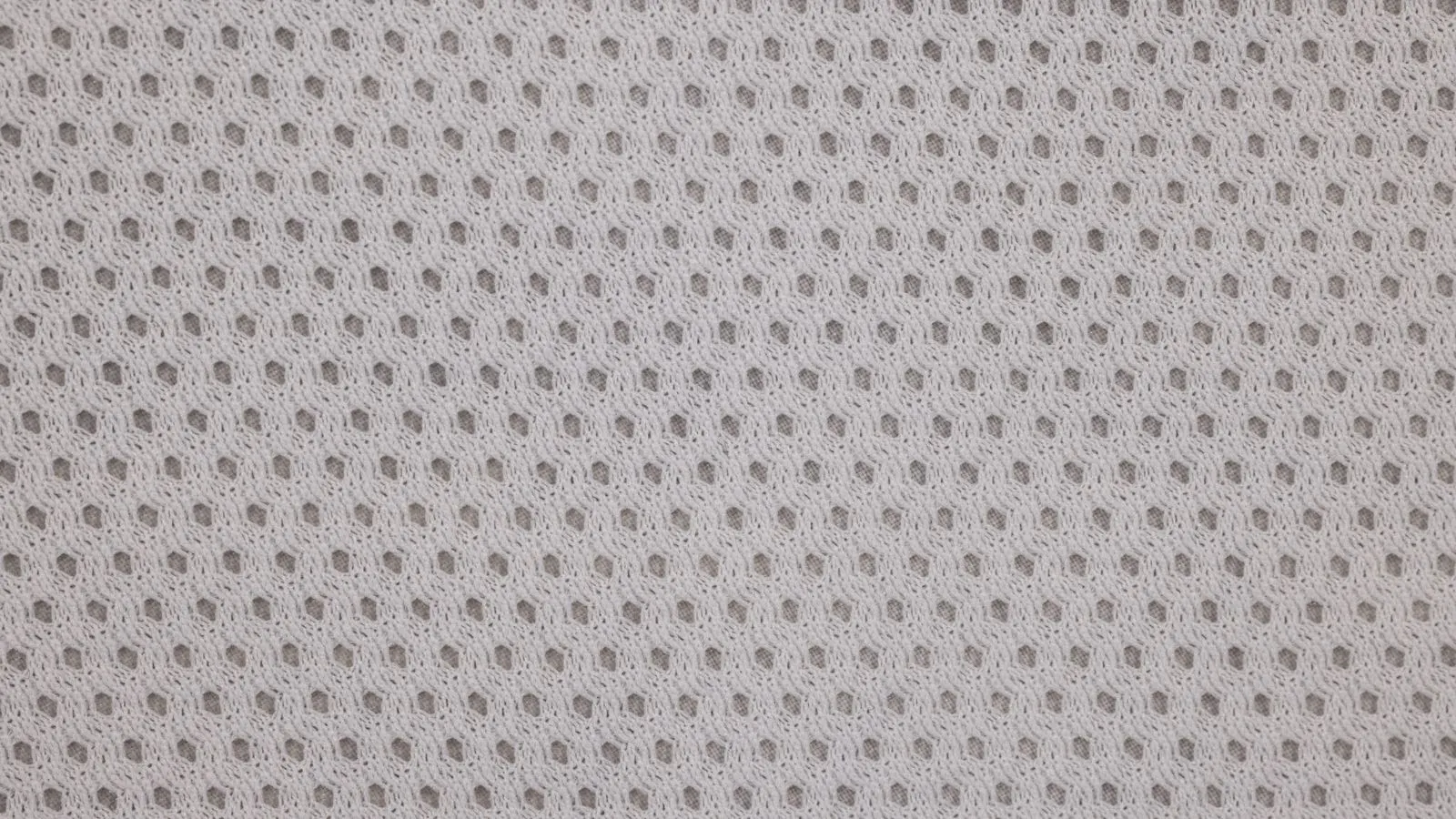
Fiber sizing determines air filter fabric efficiency by controlling pore structure and particle capture. Smaller fibers create tighter barriers, while fiber length and distribution affect pressure drop and load capacity. Matching these factors to target particle sizes ensures reliable performance.
- Fiber diameter directly influences the tightness of the air filter fabric pore structure.
- Fiber length and arrangement determine how particles are captured and how pressure builds.
- Smaller fibers increase filtration efficiency but raise resistance and cost.
- Fiber sizing must be matched to the specific particle sizes and loading conditions.
- Verifying fiber size and bonding methods helps ensure consistent filtration performance.
How Fiber Sizing Shapes the Air Filter Fabric
Fiber sizing is the first variable that sets the performance ceiling of an air filter fabric. The diameter, length, and distribution of individual fibers control the pore structure that particles must pass through. When a buyer specifies a nonwoven for filtration, fiber sizing is not a secondary detail. It is the primary engineering parameter that defines how the material interacts with airborne contaminants.
In a nonwoven fabric, fibers are laid in a random or oriented pattern and bonded together. The spaces between these fibers form the pores. Particles are captured when they collide with fibers or settle into the pore network. If the fibers are thick, the pores are larger and smaller particles may pass through. If the fibers are thin, the pores narrow and capture efficiency rises. This relationship is the core mechanism behind air filter fabric selection.
Why Fiber Diameter Changes Particle Capture
The diameter of each fiber sets the scale of the pores in the fabric. A simple geometric relationship exists between fiber thickness and the average pore size. Thicker fibers create larger voids. Thinner fibers create smaller voids. This is not a matter of surface texture or coating. It is a structural property of the fiber matrix.
Consider two fabrics with the same areal density and bond type. One uses 5-micron fibers. The other uses 15-micron fibers. The fabric with the 5-micron fibers will have a tighter pore network. It will capture a higher fraction of small particles. The fabric with the 15-micron fibers will have larger pores. It will allow more air to pass with lower pressure drop, but it will let smaller particles through. The trade-off is direct: tighter capture comes with higher resistance.
The Role of Fiber Length and Orientation
Fiber length changes how the pore network forms. Short fibers tend to create a more uniform, dense mat. Long fibers can bridge gaps and create a more open structure. The orientation of fibers also matters. If fibers are randomly laid, the pore structure is isotropic. If fibers are oriented in one direction, the fabric may have different resistance and capture behavior depending on the airflow direction.
Long fibers can increase the path length for particles, giving more opportunities for interception. However, very long fibers can reduce the density of the fiber crossing points, potentially weakening the bond and creating larger openings. For air filter fabric applications, fiber length must be balanced. Too short, and the fabric may lack strength. Too long, and the pore structure may become less predictable.
Pressure Drop and Loading Capacity
Filtration efficiency does not exist in isolation. Every increase in capture efficiency adds resistance to airflow. The pressure drop across the filter is a direct result of the fiber sizing and the load of captured particles. As particles accumulate on the fabric, they fill the pores and increase the resistance. The fabric reaches a pressure drop limit at which it can no longer maintain the required airflow.
Smaller fibers capture more particles, which means the filter loads faster. The pressure drop rises more quickly. Larger fibers allow more air through initially, but they capture fewer particles, so the filter may last longer in terms of particle load but may not meet the same efficiency standard. For industrial air filter fabric, the goal is to find the fiber sizing that meets the efficiency target while keeping the pressure drop within the system design limits.
A Worked Example in Plain Words
Imagine an engineer designing a ventilation system for a machining shop. The air carries metal dust with particles ranging from 1 to 10 microns. The system fan has a fixed airflow rate. The engineer must choose an air filter fabric that removes the dust without choking the fan.
If the engineer selects a fabric made from 2-micron fibers, the pore structure is very tight. The fabric will capture most of the dust, including the fine 1-micron particles. The airflow resistance will be high. The fan may need to work harder, and the filter may reach its pressure drop limit sooner because it captures so much material.
If the engineer selects a fabric made from 12-micron fibers, the pore structure is much larger. The fabric will capture the larger 10-micron particles easily. The 1-micron particles may pass through. The pressure drop will be low. The fan will run easily. However, the air leaving the filter will still contain fine dust.
The correct choice depends on the application. If the goal is worker protection, the 2-micron fabric may be necessary. If the goal is pre-filtering to protect a more expensive final filter, the 12-micron fabric may be sufficient. The fiber sizing decision aligns the material to the specific particle size distribution and system constraints.
How Fiber Sizing Affects Sourcing Decisions
When sourcing air filter fabric, fiber sizing is a specification that must be verified. A supplier may offer several grades. The difference between grades is often the fiber diameter and the fiber length distribution. The areal density, or mass per unit area, also matters. A fabric with the same fiber diameter but higher areal density will have smaller pores and higher resistance.
Buyers should ask for the fiber diameter range, not just a single number. Natural fibers and synthetic fibers vary slightly in diameter. The specification should state the mean diameter and the range. For example, a specification might state a mean fiber diameter of 8 microns with a range of 6 to 10 microns. This range tells the engineer how much variation to expect in the pore structure.
Bonding method also interacts with fiber sizing. Thermal bonding, chemical bonding, or mechanical needle punching all affect how the fibers stay in place. A tightly bonded fabric with small fibers will maintain its pore structure under load. A loosely bonded fabric may open up as particles load the filter, causing efficiency to drop. The fiber sizing and bonding must be evaluated together.
Practical Checks Before Procurement
Before ordering bulk air filter fabric, the buyer should confirm the fiber sizing against the filtration requirement. The following checks help ensure the material will perform as expected.
- Confirm the target particle size distribution. The fiber diameter must be small enough to capture the smallest particle that must be removed.
- Check the areal density. Higher density tightens the pores but increases pressure drop.
- Verify the fiber length and orientation. Randomly laid short fibers create a uniform structure. Oriented long fibers create a directional structure.
- Review the bonding method. Strong bonding preserves the pore structure under load and humidity.
- Request a small sample for a flow test. Measure the pressure drop at the design airflow rate and compare it to the system limit.
These checks prevent the common mistake of selecting a fabric based on price alone. Two fabrics may look identical in color and texture. One may use 3-micron fibers and the other 15-micron fibers. The performance difference will be significant. Verifying the fiber sizing ensures the air filter fabric meets the intended filtration standard.
Summary of Trade-Offs
The table below summarizes the main trade-offs in fiber sizing for filtration applications.
| Fiber Sizing Factor | Smaller Fibers | Larger Fibers |
|---|---|---|
| Pore Size | Tighter, smaller voids | Wider, larger voids |
| Filtration Efficiency | Higher for fine particles | Lower for fine particles |
| Pressure Drop | Higher resistance | Lower resistance |
| Loading Capacity | Loads faster, shorter life | Loads slower, longer life |
| Cost | Higher material cost | Lower material cost |
| Strength | May require stronger bonding | Easier to handle and bond |
The choice between small and large fibers is not about which is better. It is about which fits the application. A small fiber fabric is better for high-efficiency final filtration. A large fiber fabric is better for pre-filtering or where high airflow is required. The air filter fabric specification must reflect this balance.
Frequently asked questions
What is the relationship between fiber diameter and pore size?
Smaller fibers create smaller pores because the fibers occupy more space in the fabric. Larger fibers leave more open space, resulting in larger pores. This relationship is fundamental to how air filter fabric captures particles.
Can a fabric with larger fibers still achieve high efficiency?
Yes, if the areal density is high enough. A fabric made of larger fibers but with a very dense layout can still have small effective pores. However, the pressure drop will be higher than a loosely packed fabric of the same fiber size.
How does fiber length affect pressure drop?
Longer fibers can bridge gaps and create a more open structure, which may reduce pressure drop. However, they can also weaken the bond and create larger openings. Shorter fibers create a denser mat with higher resistance but more uniform pore structure.
Should I always choose the smallest fiber available for maximum efficiency?
No. The smallest fibers create the tightest pores but also the highest pressure drop and the fastest loading. The correct fiber size is the one that meets the required particle capture efficiency while staying within the system airflow limits.
How do I verify the fiber sizing of a sample?
Request the supplier specification for the mean fiber diameter and range. You can also measure the areal density and perform a flow test to check the pressure drop. Microscopic examination can confirm the fiber diameter and length distribution if needed.