Selecting the right filtration nonwoven for HVAC systems requires balancing filtration efficiency against airflow resistance. This guide covers media types, fiber sizing, bonding methods, and validation steps to help buyers make informed, application-specific decisions.
- Match filtration nonwoven media to the target MERV rating or particle size range.
- Monitor pressure drop over time to identify when media replacement is needed.
- Verify fiber sizing and bonding data before bulk procurement for HVAC applications.
- Consider environmental conditions like humidity and dust loads when specifying fabric.
- Request samples and run pilot tests before committing to large-scale production.
Define the filtration target
HVAC systems do not use a single standard fabric. The correct filtration nonwoven depends on the particle size you must capture, the airflow rate, and the maintenance cycle. Start with the design specification. A residential air handler may require a low-efficiency panel for dust and pollen. A commercial cleanroom or industrial process may need a high-efficiency bag or pleated media to capture submicron particles.
Identify the target rating first. MERV ratings are a common reference in North American HVAC design. For industrial or European applications, efficiency is often expressed as percent efficiency at a specific particle size, such as 1.0 micron or 5.0 micron. The rating defines the minimum capture performance. From there, the fabric must also meet airflow and pressure drop requirements.
Choose the right web or media type
Nonwoven fabrics are made through different processes. Each process creates a distinct fiber architecture that affects filtration performance.
- Needle felt: Fibers are mechanically bonded using needles. This creates a dense, felted structure. Needle felt is common in pleated bags and cartridge elements where high efficiency and durability are required. It handles high air velocities well but can have a higher initial pressure drop.
- Spunbond: Fibers are extruded into continuous filaments and bonded thermally or mechanically. Spunbond fabrics are lighter and more open. They are often used as primary pre-filtration media in HVAC systems to capture large particles before they reach a high-efficiency stage.
- Meltblown: Fine fibers are produced from a melt process. Meltblown fabrics are very dense and efficient at capturing fine particles. They are frequently used in HEPA or high-merver media. They can be sensitive to high humidity and may require a protective coating.
- Spunlace: Fibers are entangled using high-velocity air jets. This creates a soft, open structure. Spunlace is often used in washable or reusable pre-filters for HVAC systems because it allows easy cleaning and has low initial resistance.
The choice depends on the stage of filtration. A typical commercial HVAC system might use a spunlace or spunbond pre-filter to catch dust, followed by a needle felt or meltblown high-efficiency stage. Combining media types improves overall system performance and extends the life of the final filter.
Evaluate pressure drop and airflow
Filtration efficiency and pressure drop are linked. A denser media captures more particles but requires more airflow energy to push air through. In HVAC systems, this energy cost adds up over time. Select a filtration nonwoven that meets the efficiency target with the lowest acceptable pressure drop.
Pressure drop increases as the filter loads with dust. A new filter has a low initial resistance. As particles build up, the resistance climbs. The system should have a differential pressure sensor or a maintenance schedule based on a pressure threshold. When selecting fabric, ask for initial and loaded pressure drop data. A fabric with a 50 percent higher initial pressure drop may seem acceptable in testing but can reduce system capacity in a tight duct run.
Consider the fan curve. HVAC fans have a specific operating point. Adding too much filter resistance moves the operating point along the fan curve. This reduces airflow. Reduced airflow can lead to poor heat exchange, increased wear on the fan motor, and inconsistent temperature control. Always verify that the selected filtration nonwoven fits within the system’s allowable pressure drop range.
Consider fiber sizing and bonding
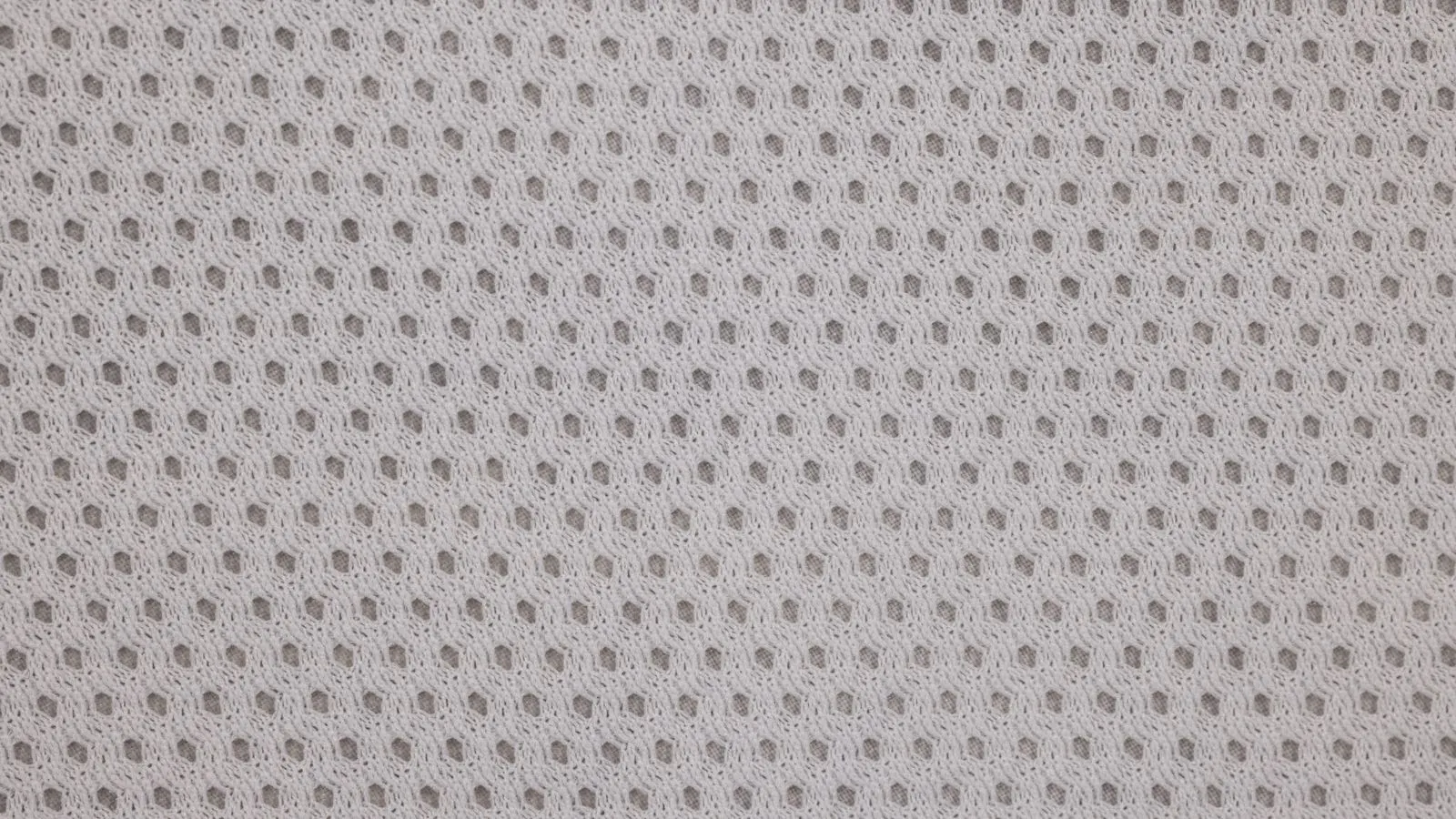
Fiber diameter and fiber distribution determine how the media captures particles. Smaller fibers create a denser web. They trap fine particles through interception and diffusion. However, very small fibers can increase pressure drop significantly. In HVAC systems, a balance is needed. Too large a fiber diameter may allow fine dust to pass through. Too small a fiber diameter may choke the system.
Bonding strength also matters. In high-efficiency applications, fibers must not pull out when the filter is handled or when the fan vibrates. Needle felt is mechanically bonded, which is generally strong. Meltblown fibers are thermally bonded, which can be sensitive to heat. If the HVAC system has a heat exchanger or a blower that generates heat, check the thermal stability of the bonding. A weak bond can cause fiber migration, which reduces efficiency and clogs the downstream air path.
Request fiber sizing data from the supplier. A typical range for high-efficiency HVAC media might be 1 to 3 microns for meltblown fibers. For primary pre-filters, fibers might be 8 to 15 microns. The exact range depends on the target rating. Verify that the fiber size matches the claimed efficiency. A mismatch between fiber size and efficiency rating is a common specification error.
Check durability and environmental factors
HVAC filters operate in specific environments. Dust loads, humidity, temperature, and chemical exposure all affect fabric life. A filtration nonwoven that performs well in a dry, clean environment may fail quickly in a dusty workshop or a humid coastal area.
Dust load is the primary driver of clogging. In high-dust environments, the filter loads quickly. This increases pressure drop and reduces airflow. You may need a denser pre-filter or a washable media to extend the life of the high-efficiency stage. In low-dust environments, the filter may last much longer, but you must ensure the media does not degrade due to other factors.
Humidity can affect meltblown and spunbond fabrics. High humidity can cause fibers to swell or weaken. This can reduce bond strength and alter the pore structure. In humid climates, consider a treated or coated media. A hydrophobic coating can reduce moisture absorption and maintain structural integrity. For needle felt, humidity is less of a concern, but mold growth on the surface is possible if the filter remains wet for extended periods.
Temperature matters too. Most HVAC systems operate at ambient to mild heat. However, some industrial air handlers use hot air. Check the maximum service temperature for the fabric. If the air temperature exceeds the bond limit, the fibers can degrade. This leads to a loss of filtration efficiency and potential fiber release.
Validate with samples and pilot testing
Specifying a filtration nonwoven based on a data sheet alone is risky. Real-world performance varies. Request samples of the top two or three candidate fabrics. Run a pilot test in a representative part of your system. Measure pressure drop and filtration efficiency at the start and after a defined dust loading period.
During the pilot test, record the following:
- Initial pressure drop and airflow rate.
- Pressure drop after a set dust loading, such as 50 grams per square meter.
- Filtration efficiency at the target particle size.
- Visual inspection of the media for fiber pull-out or clogging.
- Time to reach the replacement pressure threshold.
These data points tell you how the fabric behaves in your specific system. A fabric that performs well in a standard test may clog quickly in your ductwork if the dust composition is different. Pilot testing is the most reliable way to confirm that the selected filtration nonwoven meets your operational needs.
Review supplier documentation and compliance
Before finalizing the selection, review the supplier’s documentation. You need a technical data sheet that lists fiber type, fiber diameter, basis weight, bonding method, and initial pressure drop. You also need a compliance statement if the fabric is used in regulated environments. For HVAC systems, check local building codes and HVAC design standards. Some standards specify minimum efficiency ratings for specific applications.
Ask for a certificate of analysis for each production batch. This document confirms that the fabric meets the agreed specifications. For bulk procurement, this is a standard requirement. It protects you if a batch is out of spec. A supplier that provides consistent documentation is a better partner for long-term HVAC filtration needs.
Fabric selection criteria table
| Criterion | What to look for | Why it matters |
|---|---|---|
| Filtration efficiency | Matches target MERV rating or particle size efficiency | Ensures the system captures required dust and particulate matter |
| Pressure drop | Initial and loaded pressure drop within fan curve limits | Prevents reduced airflow, increased energy use, and fan wear |
| Fiber sizing | Diameter and distribution within specified range | Affects capture mechanism and clogging behavior |
| Bonding strength | Mechanical or thermal bond suitable for handling and vibration | Prevents fiber pull-out and maintains media integrity |
| Environmental resistance | Tolerance to humidity, temperature, and dust load | Determines filter life in the actual operating environment |
| Compliance | Meets local HVAC standards and building codes | Ensures legal and performance requirements are satisfied |
Decision checklist
Before you commit to a filtration nonwoven for your HVAC system, run through this checklist:
- Confirm the target filtration rating and particle size.
- Identify the system’s allowable pressure drop range.
- Select the appropriate web type based on the filtration stage.
- Verify fiber sizing and bonding data from the supplier.
- Assess dust load and humidity in the operating environment.
- Run a pilot test with samples to confirm real-world performance.
- Review documentation and request a certificate of analysis.
Selecting the right filtration nonwoven is a practical exercise. It requires matching media properties to system constraints. The best fabric is not the highest efficiency available. It is the fabric that meets the target rating within the system’s airflow and maintenance limits. Use the criteria above to make that decision.
Frequently asked questions
What is the difference between MERV and HEPA ratings for filtration nonwovens?
MERV is a rating scale for air filters based on efficiency at 3.0 and 5.0 micron particle sizes. HEPA is a standard for high-efficiency air filtration, typically requiring 99.97 percent efficiency at 0.3 microns. The media type and density differ significantly between the two.
Can I use a washable pre-filter with a high-efficiency final filter?
Yes. A washable spunlace or spunbond pre-filter can capture large particles and extend the life of the final filtration nonwoven. This is common in commercial HVAC systems to reduce maintenance costs.
How do I know when to replace a filtration nonwoven filter?
Monitor the differential pressure across the filter. When the pressure drop reaches the threshold specified by the HVAC design, replace the filter. This threshold is usually set at a specific percentage increase over the initial pressure drop.
Are there filtration nonwovens that work well in high humidity environments?
Yes. Meltblown fabrics can be sensitive to moisture. Coated or treated media, or needle felt structures, are often used in humid environments to maintain bond strength and efficiency.
How much does the fiber diameter affect pressure drop?
Smaller fibers create a denser web. This increases capture efficiency but also increases the resistance to airflow. A small change in fiber diameter can lead to a significant change in pressure drop. Always verify the fiber sizing against your system's airflow limits.