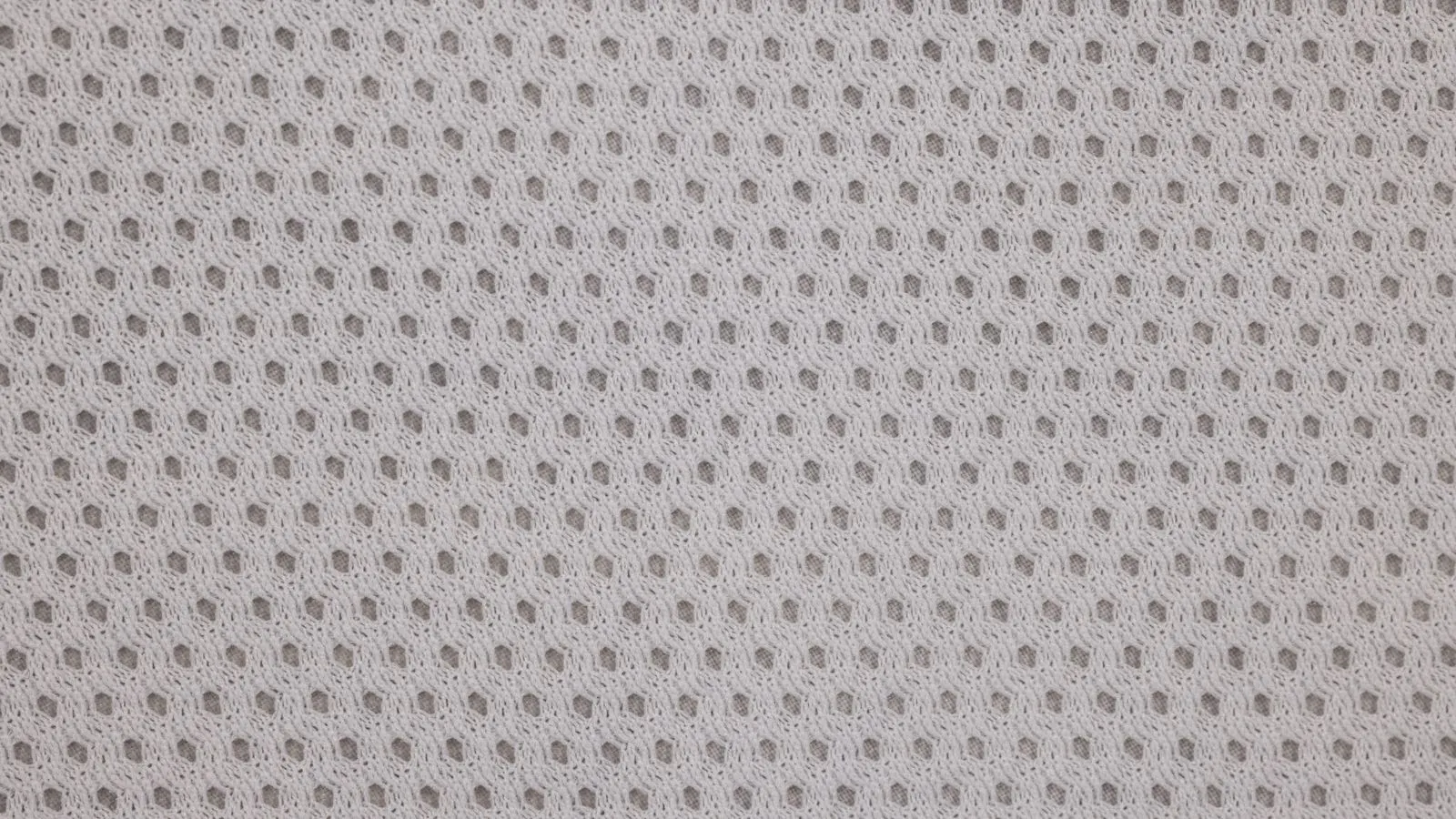
Meltblown weight directly influences the pore structure and density of filtration nonwovens. For MERV ratings, a lighter weight offers lower pressure drop but may reduce capture efficiency, while a heavier weight improves filtration but increases resistance. Buyers should match fabric weight to the specific MERV rating and airflow requirements of their HVAC system.
- Meltblown weight determines the density and pore structure of the filtration nonwoven.
- Lighter weights reduce pressure drop but may struggle with higher MERV ratings.
- Heavier weights improve particle capture but increase airflow resistance.
- Always verify pressure drop data against your system's airflow capacity.
- Consult the manufacturer's technical data sheet for specific weight recommendations.
What determines the relationship between fabric weight and MERV rating?
The MERV rating of a filter is not determined by a single variable. It is the result of multiple factors working together, including fiber diameter, fiber length, fiber orientation, and the overall mass per unit area of the web. In meltblown filtration nonwovens, the meltblown weight is the primary driver of the web’s density.
A higher meltblown weight creates a denser web with smaller, fewer pores. This structure is better at capturing smaller particles. A lower weight produces a more open structure. This allows more air through with less resistance. The challenge for procurement managers is finding the balance point where the filter meets the required MERV rating without choking the HVAC system.
The relationship is not linear. Moving from a low MERV rating to a medium MERV rating often requires a significant increase in fabric weight. However, the jump from a medium MERV to a high MERV rating may require a much larger increase in weight or a change in fabric structure entirely. This is why relying on a simple weight-to-rating chart is risky.
Consider a standard pleated filter frame. If you increase the meltblown weight by 10 percent, the pressure drop may rise by 25 percent or more. The fibers tangle more densely, and the average pore size shrinks. Particles are captured via interception and impaction rather than diffusion. To capture particles in the 3 to 5 micron range, which is a common target for MERV 11 to 13 applications, the web must be dense enough to force air paths that intersect the fibers. If the web is too light, the air stream lines up with the pores, and particles pass through.
Fiber diameter is a critical variable alongside weight. A meltblown fiber with a diameter of 1.5 microns behaves differently than one at 2.5 microns, even if the fabric weight is identical. The thinner fiber creates a more tortuous path for the air. This increases the chance that a particle will strike a fiber before passing through the gap. Consequently, a manufacturer can achieve a high MERV rating using a lighter web if they use a finer fiber diameter. Conversely, a coarser fiber requires a heavier web to achieve the same rating.
Fiber length and orientation also play a part. Short, random fibers create a three-dimensional web that traps particles effectively. Longer fibers, if oriented in specific directions, can create a mat that is easier for air to pass through but may allow larger gaps. In many modern filtration webs, meltblown fibers are combined with spunbond or electrospun fibers to create a layered structure. This combination allows the top layer to capture large particles while the dense meltblown core captures fine dust. The total weight of the web is the sum of these layers, but the filtration efficiency depends on the specific distribution of these materials.
How does pressure drop affect system performance?
Pressure drop is the resistance the fabric creates to airflow. In an HVAC system, this resistance directly impacts energy consumption. A fan with to move air against a higher pressure drop must work harder, consuming more electricity. Over time, this increased load can shorten the lifespan of the fan motor and the blower assembly.
For meltblown filtration nonwovens, pressure drop increases as the fabric weight increases. This is because the denser web presents more surface area for the air to collide with. It also means the air has a harder time finding pathways through the pores.
A common mistake in procurement is selecting a filter based solely on the MERV rating. A buyer might choose a high weight meltblown fabric to achieve MERV 13, only to discover the resulting pressure drop is too high for the existing system. The result is reduced airflow, poor indoor air quality, and potential system damage. The goal is to select a fabric weight that achieves the target MERV rating while keeping the pressure drop within the system’s design limits.
Pressure drop is usually measured in Pascals (Pa) or inches of water column (in. w.c.) at a specific face velocity. For example, a residential system might be designed for a pressure drop of 0.1 to 0.25 in. w.c. at clean conditions. A commercial system with larger ductwork might tolerate 0.5 to 1.0 in. w.c. If the meltblown fabric exceeds these limits, the fan operates at a lower efficiency. The fan curve shifts, and the system may not deliver the required CFM.
There is also a dust loading effect. A new filter has a low pressure drop. As particles accumulate on the web, the pores fill up, and the pressure drop increases significantly. A heavier meltblown fabric may have a lower initial pressure drop than a lighter one if the pore structure is more uniform, but it will clog faster. The rate of clogging depends on the particle size distribution in the air. In an environment with a lot of fine dust, a high-weight web will become saturated quickly. In a clean environment, the same web might last much longer.
When evaluating pressure drop, you must consider the total system resistance. The filter is just one component. The ducts, the coils, and the dampers all contribute to the total static pressure. If you select a filter with a high pressure drop, you reduce the airflow margin. This can cause the fan to run at a speed that is too high for the system, leading to noise and vibration issues. The fan motor will also draw more current, increasing the electrical bill. In a large commercial building, even a small increase in static pressure can result in a significant energy cost over the life of the system.
What are the typical weight ranges for different MERV ratings?
While specific numbers vary by manufacturer and fiber diameter, there are general trends in the industry. For MERV 8 filters, meltblown weights are typically on the lower end. The fabric is lightweight enough to maintain a reasonable pressure drop for standard residential and light commercial systems.
For MERV 11, the fabric weight increases. The web becomes denser to capture a wider range of particle sizes. For MERV 13, the weight increases further, or the fabric may be combined with other nonwoven types to achieve the required efficiency.
It is important to note that the same MERV rating can be achieved with different fabric weights depending on other variables. A fabric with a smaller fiber diameter might achieve MERV 13 at a lower weight than a fabric with a larger fiber diameter. Therefore, weight alone is not a sufficient basis for selection. The technical data sheet must be reviewed for the specific pressure drop at a given airflow rate.
In practice, meltblown weights for MERV 8 filters often fall in the range of 10 to 20 grams per square meter (gsm). These fabrics are open and allow for high airflow. MERV 11 filters typically use meltblown weights in the range of 20 to 35 gsm. The web is denser, and the pores are smaller. MERV 13 filters may use weights from 30 to 50 gsm or higher. However, these ranges are not fixed. A manufacturer using a very fine fiber might achieve MERV 13 at 25 gsm, while a manufacturer using a coarser fiber might need 45 gsm.
The gsm value is a measure of mass per unit area. It does not tell you the thickness of the fabric. A 30 gsm meltblown fabric could be 1 mm thick or 2 mm thick, depending on the fiber diameter and the density of the web. A thicker fabric generally has more layers and a more complex pore structure. This can improve filtration efficiency but also increases the pressure drop.
When comparing datasheets, look at the pressure drop at a standard face velocity, such as 1.5 meters per second. If one fabric has a weight of 30 gsm and a pressure drop of 200 Pa, and another has a weight of 30 gsm but a pressure drop of 400 Pa, the first fabric is likely better suited for a system with limited static pressure. The difference in pressure drop comes from the fiber structure and the way the fibers are arranged. The 200 Pa fabric has a more open pore structure that allows air to pass more easily.
How to evaluate a meltblown fabric for your specific application
When evaluating a meltblown fabric for a MERV filter, you need to look beyond the weight specification. You need to understand the performance characteristics of the fabric under the conditions it will operate in.
- Check the MERV Rating: Ensure the fabric, when constructed into a filter, meets or exceeds your required MERV rating. Do not assume a certain weight will guarantee a certain rating.
- Review the Pressure Drop Data: The data sheet should provide pressure drop (in Pascals or inches of water column) at a specific airflow rate. Compare this to your system’s airflow. If the data is not provided, request it.
- Consider the Fiber Diameter: Smaller fiber diameters generally allow for better filtration at lower weights. This can be a way to reduce pressure drop.
- Evaluate the Fabric Structure: Some meltblown fabrics are laid in a specific pattern or combined with other nonwovens (like spunbond) to improve performance. Understand the construction.
- Test if Necessary: For critical applications, a small batch test is recommended. Run the filter in the system and measure the pressure drop and airflow.
To check the MERV rating, you need to understand how the rating is determined. MERV ratings are based on the removal efficiency of particles of specific sizes. For MERV 13, the filter must remove a high percentage of particles in the 1 to 3 micron range. The rating is tested on a complete filter, not just the fabric. The frame, the pleat spacing, and the seal all affect the overall performance. A high-efficiency fabric in a poorly sealed frame will underperform.
When reviewing pressure drop data, look for the face velocity. Face velocity is the speed of air moving across the surface of the fabric. It is calculated by dividing the total airflow by the frontal area of the filter. If the data sheet provides pressure drop at 1.5 m/s, and your system operates at 2.0 m/s, you must adjust the value. Pressure drop increases with the square of the face velocity. If you increase the face velocity by 33 percent, the pressure drop can increase by more than 100 percent. This is a critical calculation for engineers.
Fiber diameter is a key specification to request. Ask the supplier for the mean fiber diameter and the range. A mean diameter of 1.5 microns is typical for high-efficiency meltblowns. A mean diameter of 3.0 microns is typical for lower-efficiency webs. The finer the fiber, the more surface area is available per unit of mass. This allows for better particle capture without increasing the weight.
The fabric structure includes the layering. Many MERV 13 filters use a three-layer construction. The top layer might be a spunbond fabric to capture large particles and reduce the load on the core. The core is a dense meltblown web. The bottom layer might be another spunbond or a nonwoven for structural support. Understanding this layering helps you understand how the pressure drop is distributed. The top layer captures the bulk of the dust, keeping the core cleaner for longer. This extends the life of the filter.
Criteria for selecting the optimal meltblown weight
Use the following table to guide your evaluation. This table outlines the key criteria to consider when choosing a meltblown fabric for your MERV filter.
| Criterion | What to look for | Why it matters |
|---|---|---|
| MERV Rating | Meets or exceeds your requirement | Ensures adequate particle capture for your air quality goals |
| Pressure Drop | Within your system’s limit at design airflow | Prevents excessive fan energy use and system strain |
| Meltblown Weight | Within the typical range for your target MERV | Indicates the density and likely pore structure of the web |
| Fiber Diameter | Smaller diameter often allows lower weight for same MERV | Can reduce pressure drop and improve efficiency |
| Airflow Capacity | Compatible with your system’s CFM | Ensures the filter will not choke the airflow |
| Durability | Maintains performance over time | Prevents premature replacement due to clogging or degradation |
The MERV rating criterion is the baseline. You must meet the air quality standard for your application. For a hospital, the requirement is strict. For a residential home, the requirement may be lower. The pressure drop criterion is the constraint. You cannot exceed the system’s design static pressure. The meltblown weight criterion is a proxy for density. It gives you a rough idea of the pore structure, but it is not a direct measure of performance. The fiber diameter criterion helps you understand the potential for efficiency. A smaller diameter allows for a lower weight at the same rating. The airflow capacity criterion ensures the filter fits the system. If the filter is too dense, the airflow drops, and the system fails to deliver the required air. The durability criterion considers the long-term performance. A filter that maintains its MERV rating after six months of use is more valuable than one that degrades quickly.
Decision checklist for procurement
Before finalizing your order, run through this checklist.
- Have you confirmed the required MERV rating for your application?
- Do you have the system’s design airflow rate (CFM or m³/h)?
- Have you requested the pressure drop data for the candidate fabrics?
- Is the pressure drop within your system’s acceptable range?
- Have you considered the fiber diameter as a factor in weight selection?
- Have you verified the manufacturer’s MERV rating for the complete filter?
- Have you planned for a small batch test if the application is critical?
- Have you accounted for the cost of increased energy use if the pressure drop is on the higher side?
By following this process, you can select a meltblown weight that delivers the required filtration performance while keeping system costs in check. The key is to treat the fabric weight as one component of a larger performance equation, not as the sole determinant of filter quality.
Frequently asked questions
Can I use a lighter meltblown fabric to reduce pressure drop and still meet a high MERV rating?
It is possible, but it depends on the fiber diameter and fabric structure. A smaller fiber diameter can help achieve the same MERV rating at a lower weight, reducing pressure drop.
What happens if the pressure drop is too high for the system?
The fan will have to work harder, increasing energy consumption. Airflow will be reduced, which can lead to poor ventilation and potential damage to the HVAC components.
Is there a standard weight for each MERV rating?
No. The weight varies by manufacturer and fiber diameter. A manufacturer's technical data sheet is the most reliable source for the specific weight and performance of their filter.
How often should I check the pressure drop of my MERV filter?
Check the pressure drop during routine maintenance. If the pressure drop exceeds the manufacturer's recommendation, the filter is likely clogged and should be replaced.
Can I use a meltblown fabric that is rated for a higher MERV than I need?
Yes, but it will likely have a higher pressure drop than necessary. This will increase your energy costs without providing significant air quality benefits. It is better to select a fabric that meets your requirement with a reasonable pressure drop.