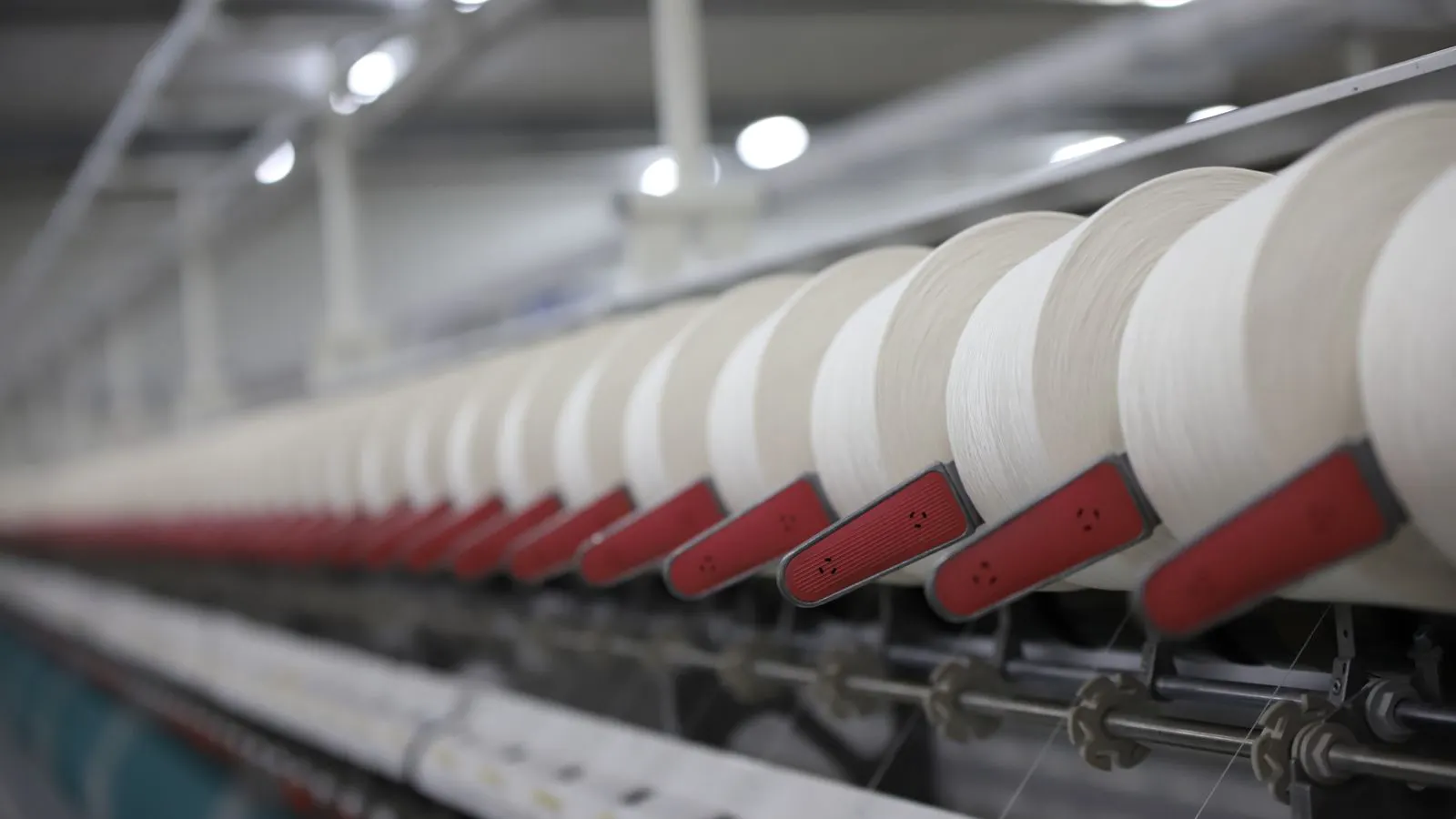
Spunbond nonwoven offers higher tensile strength and structural integrity than meltblown fabric due to its continuous filament construction. Meltblown fabric provides superior filtration efficiency and barrier properties but lacks mechanical strength. Engineers must match fabric properties to specific load, durability, and filtration requirements.
- Spunbond nonwoven fabric delivers significantly higher tensile strength and puncture resistance than meltblown fabric.
- Meltblown fabric excels in filtration efficiency and barrier performance but has limited structural integrity.
- Hybrid SM fabrics combine both processes to balance mechanical strength and filtration capabilities.
- Application-specific requirements for load, durability, and filtration efficiency determine the correct fabric choice.
What Drives the Difference in Tensile Strength
Spunbond nonwoven and meltblown fabric operate on fundamentally different mechanical principles. Spunbond fabric consists of continuous polymer filaments that are laid and bonded into a sheet. These filaments create a continuous network that distributes mechanical loads across the entire fabric area. The resulting fabric resists stretching, tearing, and puncturing under sustained force. The filament diameter typically ranges from 20 to 80 microns, depending on the polymer type and the spinneret orifice size used in the extrusion head. This continuous structure allows the material to behave somewhat like a woven textile, even though no weaving process is involved.
Meltblown fabric uses a different process. Molten polymer is blown through nozzles to create fine fibers, which are then collected on a moving web. These fibers are much thinner than spunbond filaments, often measured in the 3 to 15 micron range. They are frequently randomly oriented or lightly bonded by electrostatic attraction or thermoplastic bonding. The fiber network lacks the continuous structural continuity found in spunbond, which limits its ability to bear mechanical loads. The fibers are individual, short strands that rely on friction and random entanglement to hold the web together.
The difference in strength is not just about fiber thickness. It is about how those fibers interact under stress. Spunbond filaments can bear tension along their length and transfer that tension to neighboring filaments through bond points. Meltblown fibers are too thin to carry significant load individually, and their random orientation prevents efficient load distribution. When a point load is applied to a meltblown sheet, the stress concentrates on a few fibers until they snap. In a spunbond sheet, the load spreads across hundreds of filaments, reducing the stress on any single strand.
Tensile Strength Comparison at a Glance
| Option | Best for | Limitations |
|---|---|---|
| Spunbond nonwoven | Structural applications, load-bearing uses, abrasion-resistant covers | Lower filtration efficiency, heavier weight, higher cost per unit filtration area |
| Meltblown fabric | Filtration, barrier protection, medical masks, fluid containment | Low tensile strength, poor puncture resistance, limited structural integrity |
| Spunbond-meltblown-spunbond (SMS) | Applications requiring both strength and filtration | Higher complexity, potential for delamination if bonds are weak, increased cost |
| Spunbond nonwoven with meltblown layer | Hybrid performance for demanding filtration with structural support | Requires careful process control to maintain layer adhesion |
| Multi-layer meltblown | High-efficiency filtration at low cost | Poor mechanical strength, limited durability, unsuitable for load-bearing uses |
When to Choose Spunbond Nonwoven for Structural Integrity
Spunbond nonwoven is the clear choice when mechanical strength is the primary requirement. This includes applications like geotextiles, construction fabrics, agricultural covers, and industrial bags. The continuous filament structure provides consistent strength in both warp and weft directions. Engineers can predict how the fabric will behave under tension, compression, and abrasion with high confidence.
In geotextile applications, for example, the fabric is laid across a trench or slope to separate fill material from the native soil. The fabric must resist the weight of the backfill and the shear forces generated by traffic or heavy equipment. A spunbond fabric with a basis weight of 100 grams per square meter or higher can support these loads without tearing. The filament continuity allows the material to stretch slightly under load and return to its original shape once the load is removed. This elasticity is a key advantage for temporary works and permanent infrastructure.
The fabric also holds its shape over time. Unlike meltblown, which can compress and lose structure under sustained loads, spunbond maintains its dimensional stability. This makes it suitable for applications where the fabric must support objects or withstand repeated handling. Agricultural covers, such as those used for greenhouse protection, rely on this stability. The fabric must withstand wind, rain, and the occasional contact with farm machinery without becoming distorted or thinning out.
However, spunbond alone cannot provide the same filtration efficiency as meltblown. The larger fiber diameter and open structure allow finer particles to pass through. If your application requires capturing submicron particles, spunbond alone will not meet the specification. The pore structure of spunbond is relatively large compared to meltblown, acting more like a physical barrier to coarse debris rather than a fine filter.
When Meltblown Fabric Meets the Requirement
Meltblown fabric is designed for filtration and barrier performance, not structural strength. Its fine fiber diameter creates a dense, tortuous path that captures particles through interception, impaction, and diffusion. This makes it ideal for medical masks, air filters, fluid containment bags, and hygiene products.
In a medical mask, the meltblown layer sits between the outer and inner spunbond or nonwoven layers. The meltblown fibers form a mat that traps particles as air passes through. The efficiency depends on the fiber diameter, the mat density, and the charge of the fibers. Many meltblown fabrics are electret, meaning they carry a static charge that attracts and holds charged particles. This charge is critical for capturing submicron particles that would otherwise slip through the open web.
The limitation is mechanical. Meltblown fabric tears easily under point loads and has low puncture resistance. It also compresses under sustained pressure, which can reduce its filtration efficiency over time. Engineers using meltblown in load-bearing applications often see premature failure. For instance, a meltblown fluid containment bag may work well for the first few hours of use but can thin and tear at the seams if the bag is lifted by its handles or subjected to vibration.
If your application involves any significant mechanical stress, meltblown alone is not sufficient. The fabric may meet initial filtration targets but will fail under practical conditions. The structural integrity of the web is too low to support its own weight over a large area or to withstand the forces generated by handling and storage.
Hybrid SM Fabrics: Balancing Strength and Filtration
The SM fabric category includes hybrid constructions that combine spunbond and meltblown layers. The most common is the SMS structure, where a meltblown layer is sandwiched between two spunbond layers. The outer spunbond layers provide tensile strength, puncture resistance, and abrasion resistance. The central meltblown layer provides the filtration efficiency that spunbond cannot achieve alone.
This hybrid approach solves the core problem: engineers need both mechanical integrity and filtration performance. The SMS structure delivers both. The spunbond layers carry the load while the meltblown layer captures particles. The ratio of the layers is adjustable. A manufacturer can produce an SMS fabric with a thin meltblown core for low-cost filtration or a thicker meltblown core for higher efficiency. The outer spunbond layers can also be adjusted in weight to match the required strength.
The key to success is layer adhesion. If the bonds between layers are weak, the fabric can delaminate under stress or during washing. Quality control checks for bond strength and layer adhesion are standard in production. Engineers should verify that the supplier tests for interlayer bond strength before specifying an SM fabric. Delamination is a silent failure mode. The fabric may pass initial tensile tests, but if the layers separate at the interface, the meltblown core can shift or tear, ruining both the strength and the filtration performance.
Practical Selection Criteria for Engineers
Selecting the right SM fabric starts with defining the failure mode. Ask what happens when the fabric fails. If the application requires the fabric to hold a load, spunbond or SMS is required. If the application requires capturing fine particles, meltblown or SMS is required. If both are needed, SMS is the standard solution.
Consider the specific load path. In a protective suit, the fabric must withstand the wearer’s movement, friction against hard surfaces, and the weight of tools or equipment carried in pockets. The outer layers must be strong enough to resist abrasion, while the inner layers must provide a barrier to contaminants. A high-spunbond-ratio SMS fabric is often preferred here because it offers better durability than a balanced structure.
Weight is another factor. Spunbond fabric is typically heavier than meltblown because of the thicker filaments. Meltblown is lighter and more compressible. The total fabric weight affects cost, packaging, and shipping. For applications where weight is critical, engineers may need to optimize the proportion of each layer in the SM structure. A lighter fabric may be required for aerospace or medical applications, but this often means reducing the meltblown core, which can lower filtration efficiency.
Durability under repeated use also matters. Spunbond holds up well to repeated washing and handling. Meltblown can degrade faster under thermal and mechanical stress. For reusable applications, spunbond or SMS with strong layer bonds is preferred. The washing process involves agitation, heat, and drying. The interlayer bonds must survive these conditions without weakening.
Common Mistakes in SM Fabric Selection
The most common error is selecting based on one property while ignoring the other. Engineers sometimes choose meltblown for its filtration efficiency without considering that the application requires structural strength. They then experience premature failure in the field. A filter bag designed for dust collection, for example, may be made from multi-layer meltblown to achieve high efficiency. However, if the bag is subjected to pressure differentials or is lifted by its top seam, the fabric can tear at the weak points.
Another mistake is assuming that any SM fabric performs the same. The ratio of spunbond to meltblown layers, the fiber weight of each layer, and the bonding method all affect final performance. Two SM fabrics with the same nominal weight can behave very differently under load. One may have a thin, dense meltblown core that provides high filtration but little strength. The other may have a thick, open meltblown core that provides some strength but lower efficiency. The specification sheet must detail the layer weights and the bonding technology.
Specification sheets often list tensile strength and filtration efficiency, but not always the interlayer bond strength. Engineers should request this data. Weak interlayer bonds are a common cause of field failures in hybrid fabrics. The bond strength should be tested using a peel or shear test, not just a visual inspection.
Final Selection Guidance
Match the fabric structure to the dominant requirement. If the application is structural, use spunbond nonwoven or a high-spunbond-ratio SM fabric. If the application is primarily filtration, use meltblown or a high-meltblown-ratio SM fabric. If both requirements are critical, use a balanced SMS structure with verified interlayer bond strength.
The SM fabric market offers multiple construction options. The right choice depends on the specific load, filtration target, durability requirement, and budget. Engineers should define these parameters clearly before requesting samples. Testing a small batch under actual operating conditions is always more reliable than relying on specification sheet data alone. A lab test on a small strip of fabric may not reveal the issues that arise when the fabric is sewn into a large bag, subjected to humidity, or handled by workers in a busy facility. Always validate the material in the real environment before committing to a large order.
Frequently asked questions
What is the tensile strength difference between spunbond and meltblown fabric?
Spunbond nonwoven has significantly higher tensile strength than meltblown fabric due to its continuous filament construction. Meltblown fabric has low tensile strength because its fine fibers cannot carry mechanical loads effectively.
Can I use meltblown fabric for structural applications?
Meltblown fabric is not suitable for structural applications. Its low tensile strength and poor puncture resistance make it unsuitable for load-bearing uses.
What is the best SM fabric for applications requiring both strength and filtration?
An SMS structure, with spunbond layers sandwiching a meltblown layer, provides the best balance of mechanical strength and filtration efficiency for dual-requirement applications.
How do I verify the quality of an SM fabric before production?
Request test data for tensile strength, puncture resistance, filtration efficiency, and interlayer bond strength. Test a small batch under actual operating conditions to confirm performance.
Does the ratio of spunbond to meltblown layers matter in SM fabric?
Yes. The ratio directly affects the balance between mechanical strength and filtration efficiency. A higher spunbond ratio increases strength but reduces filtration performance, while a higher meltblown ratio does the opposite.