Selecting spunbond nonwoven fabric requires matching GSM, fiber orientation, and mechanical properties to your application. This guide outlines the key criteria for evaluating polypropylene nonwoven materials and production capabilities.
- Match GSM and filament weight to the specific load and filtration needs of the project.
- Verify mechanical properties such as tensile strength and MD/CD consistency before placing bulk orders.
- Audit production processes and quality documentation to ensure batch-to-batch consistency.
- Request sample testing under real working conditions before finalizing supplier selection.
Defining the Application Requirements
Before contacting suppliers, define exactly what the fabric must do. Spunbond nonwoven fabric serves many roles, from protective covers to filtration substrates. The first step is to identify the primary function. Is the material acting as a structural barrier, a liquid carrier, or a filtration base? The answer changes the fiber selection, the GSM target, and the testing protocol entirely. A fabric designed to hold soil in place behaves differently than one meant to trap airborne particles.
Write down the target GSM. This number drives cost, thickness, and mechanical performance. A low GSM fabric, often in the tens of grams per square meter range, suits lightweight applications like hygiene products or thin protective garments. These items require drape and softness over strength. Higher GSM fabrics, ranging into the hundreds, support industrial covers, geotextiles, or heavy filtration media. For example, a geotextile used under a gravel base needs a weight that resists compression from the vehicle above, while a filtration media for water treatment requires a weight that allows flow without clogging too quickly.
Determine the fiber material. Polypropylene dominates the market due to its chemical resistance and cost efficiency. However, specific applications may require polyester or blended compositions for better thermal stability or dimensional stability. If the fabric will be exposed to hot water or steam, polypropylene may soften or deform. Polyester holds its shape better at higher temperatures. Confirm the chemical compatibility of the resin with any fluids or chemicals the fabric will contact. Check the data sheet for the melt flow index. A lower index indicates a higher molecular weight, which generally translates to better chemical resistance and strength.
Evaluating Mechanical Properties
GSM is only one metric. Mechanical performance dictates whether the fabric will hold up under tension, abrasion, or compression. Request technical data sheets that list tensile strength in both the Machine Direction (MD) and Cross Direction (CD). These values are usually measured in Newtons per centimeter. A fabric might have strong MD strength but weak CD strength. If you use it in a way that pulls against the cross direction, it will fail.
Spunbond production creates a continuous web. The alignment of the fibers depends on the drawing process. A well-controlled draw ratio produces a fabric with strong, directional integrity. If the application involves heavy loads in one direction, prioritize MD strength. If the fabric will be subjected to multi-axial stress, look for balanced MD/CD properties. For instance, a geotextile laid horizontally under a roadbed experiences tension along the length of the roll. A protective cover for a pallet might need balanced strength because it can be pulled in any direction during handling.
Check the basis weight consistency. A variation of more than 5 to 10 percent across a roll can cause processing issues. For example, in a filtration system, a thicker section may trap more particles, while a thinner section may tear under pressure. Ask suppliers for their standard deviation on GSM and tensile strength across a typical roll. If a supplier cannot provide this data, it suggests a lack of process control. Inconsistent weight leads to inconsistent performance, which is costly to correct downstream.
Assessing Surface and Filament Structure
The surface characteristics of spunbond fabric influence how it interacts with other materials. A dense, tight filament structure offers better puncture resistance and liquid barrier performance. A looser structure allows for better air permeability and drape. For a fluid barrier, you want the filaments to be close enough together to block liquid passage. For an air filter, you want enough space for air to pass through while still catching dust.
Examine the filament weight. This is the weight of an individual fiber, usually measured in grams per kilometer. Lower filament weights create a finer, smoother surface. Higher filament weights produce a rougher, more open structure. For filtration applications, a lower filament weight often improves particle capture efficiency. Smaller fibers create tighter gaps that catch finer particles. For structural applications, higher filament weights provide better load-bearing capacity. Thicker fibers can carry more force before breaking.
Consider the surface finish. Some suppliers offer embossed or textured surfaces to increase friction or adhesion. If your process involves lamination or bonding, verify how the surface texture affects the bonding energy. A rough surface may require different adhesive formulations than a smooth one. An embossed fabric might bond better with a pressure-sensitive adhesive because the texture creates mechanical interlocks. A smooth fabric might bond better with a hot melt adhesive that flows into the surface. Test the bonding strength on a small scale before committing to a large order.
Reviewing Nonwoven Production Capabilities
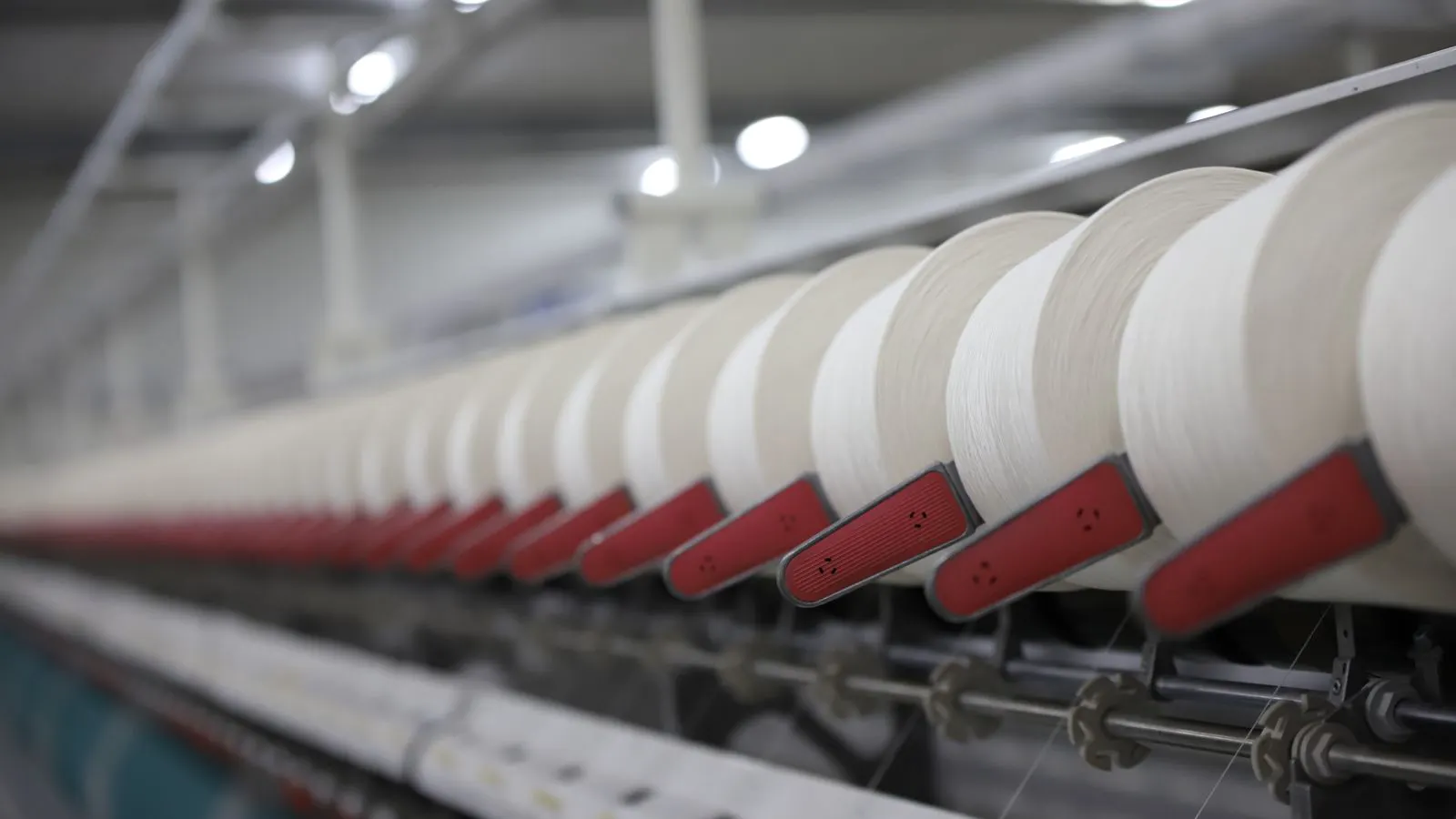
Do not just buy the fabric. Evaluate the nonwoven production line behind it. Spunbond production involves extrusion, drawing, and laying processes. Variations in any of these stages affect final quality. The quality of the raw pellets is the foundation. If the polypropylene pellets have impurities or inconsistent melt flow, the extrusion process will struggle to produce a uniform web.
Ask about the extrusion temperature control. Stable temperatures prevent molecular degradation and ensure consistent melt flow. High temperatures can break down the polymer chains, leading to weak spots and discoloration. Low temperatures can cause incomplete melting and blockages in the die. A mature facility uses precise thermocouples and feedback loops to maintain the die temperature.
Ask about the drawing ratio and the number of draw stages. A higher draw ratio generally aligns the fibers more, increasing strength. However, it can also thin the fabric. The supplier should explain how they balance these factors for your specific GSM requirement. Multiple draw stages allow for gradual stretching. This reduces stress concentration and produces a more uniform fiber orientation. If a supplier uses a single high-stretch draw stage, the fabric might have higher strength but lower consistency.
Check the quality control points. A mature facility inspects the web at multiple stages. Look for inline sensors that monitor thickness, weight, and web defects. These sensors can detect holes, slubs, or off-web material as it happens. Ask for their defect rate per roll. If a supplier reports a high defect rate, ask how they handle rework. Do they trim out damaged sections? Do they reject the roll? A good supplier will show you their inspection records. They will also explain their defect classification system. Not all defects are equal. A small hole might be acceptable for a non-critical cover but unacceptable for a fluid barrier.
Comparing Supplier Data and Samples
Suppliers provide datasheets, but datasheets are static. Your application is dynamic. Always request samples. Do not rely on a single sample. Ask for at least two or three rolls from different production batches. Batch variation is normal in manufacturing. Testing multiple batches helps you understand the range of performance you might receive over time.
Test the samples in your actual process. If the fabric is for a filtration system, run a water flow test. Measure the pressure drop and the particle capture rate. If it is for a protective garment, test the puncture resistance and the drape. If it is for a geotextile, test the filtration coefficient and the tensile strength under saturation. Saturation changes the behavior of nonwovens. Water can increase weight and reduce strength. Always test the fabric in the condition it will face in service.
Compare the samples against your internal specifications. Look for color consistency, odor, and surface defects. A slight color variation between batches may be acceptable for some uses but unacceptable for others. If the fabric is for a consumer product, color consistency is critical. If it is for an industrial cover, a minor shift in hue might not matter. Document the results of your sample tests before negotiating the final order. Keep the samples and the test data. They serve as a reference when you inspect the incoming rolls.
The Criteria Table
| Criterion | What to look for | Why it matters |
|---|---|---|
| GSM Stability | Standard deviation under 5% | Prevents process variability and weight fluctuations |
| Tensile Strength | Consistent MD/CD values | Ensures the fabric meets load-bearing requirements |
| Filament Weight | Matched to application needs | Controls surface roughness and filtration efficiency |
| Defect Rate | Low percentage per roll | Reduces waste and rework in downstream processes |
| Chemical Compatibility | Resin type matches fluids | Prevents degradation and contamination |
Decision Checklist
Before signing a purchase order, confirm the following points.
- Application function is clearly defined (filtration, structural, hygiene).
- Target GSM and filament weight are specified in the technical order.
- Mechanical properties (tensile strength, MD/CD balance) meet project requirements.
- Chemical compatibility of the polypropylene nonwoven fabric is verified.
- Sample testing is completed under real working conditions.
- Supplier production audit covers extrusion, drawing, and QC processes.
- Quality documentation, including batch records, is provided.
- Lead time and packaging options are confirmed.
- Return policy for defective rolls is agreed upon.
- Long-term supply terms are reviewed.
Final Thoughts on Selection
Selecting the right spunbond nonwoven fabric is a process of matching material science to engineering reality. It is not just about buying a roll of material. It is about securing a consistent input for a critical process. The criteria above help you move beyond price comparisons and focus on performance. A fabric that meets the minimum specification but performs poorly in service will cost more than a premium fabric that delivers reliable results.
A supplier who can explain their nonwoven production parameters and provide rigorous test data is a better partner than one who only offers a price list. Ask for the details. Request the test reports. Visit the facility if possible. The time spent in evaluation pays off in reduced downtime and fewer rejected batches. If you cannot visit, ask for a video tour of the production line. Look for clean facilities, modern equipment, and trained staff. These are signs of a serious manufacturer.
If your project involves complex requirements, such as multi-layer structures or specific thermal treatments, discuss these with the supplier early. They may suggest a co-extrusion or a blending solution that improves performance. Open communication between procurement and engineering is the best tool for avoiding costly errors. Make sure both teams are aligned on the specifications before the first sample is ordered.
Frequently asked questions
What is the difference between GSM and filament weight?
GSM is the total weight of the fabric per square meter. Filament weight is the weight of a single fiber in grams per kilometer. GSM determines thickness and bulk, while filament weight affects surface texture and strength.
Should I choose low or high GSM for filtration?
This depends on the target. Low GSM offers better air permeability and lower cost but lower load resistance. High GSM provides stronger filtration support and better puncture resistance but may increase pressure drop.
How do I check if a supplier is reliable?
Request a site audit or a third-party audit report. Ask for quality control documentation, defect rates, and sample test results from their lab. A reliable supplier will share their production parameters and process controls.
What if the fabric color changes between batches?
Minor color variations are common in polypropylene due to resin sources. If color is critical, specify a tight tolerance in your purchase order. Request samples from multiple batches to verify consistency before bulk ordering.
Can I mix different suppliers in the same project?
It is risky. Different suppliers may have variations in GSM, tensile strength, or surface finish. Mixing sources can lead to inconsistent performance. Ideally, use one primary supplier for a single project to ensure uniformity.